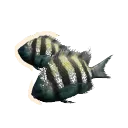
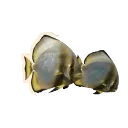
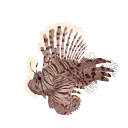
Planet Zoo 2 Schooling Bannerfish — habitat, biome, size & which animals it can live with
Schooling Bannerfish is one of the 136 Planet Zoo 2 launch species. It is kept in an Aquarium or an Exhibit, accepts the Reef biome, has no barrier requirement, and is listed at no published size. It shares a biome and an enclosure type with 23 other species, so it can be mixed into a shared enclosure — 17 of those pairings are confirmed by Frontier's own text.
Every figure on this page comes from the official Planet Zoo 2 Zoopedia export rather than trailer footage: biome, enclosure type, barrier grade, size and the compatibility verdicts are all taken from the game's own data.
Size (M)—
Weight (M)—
Barrier—
EnclosureAquarium / Exhibit
BiomesReef
StatusLeast Concern
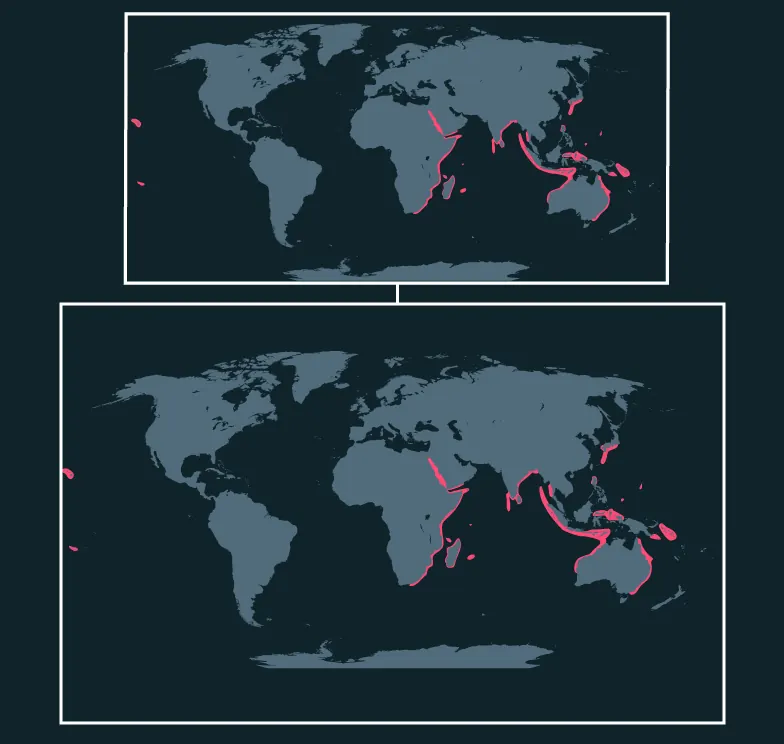
Where it lives in the wild
Indian Ocean · Pacific Ocean
17verified enclosure-mates
17same biome + habitat
no published sizesize (male)
no barrier gradebarrier grade
Schooling Bannerfish at a glance
Source: official Planet Zoo 2 Zoopedia export (136 species). Also on the searchable animal list.
Enclosure and barrier requirements
Schooling Bannerfish is kept in an Aquarium or an Exhibit and accepts the Reef biome. The barrier requirement is none at all, and that is the number to check before building: a Grade 4 animal behind a Grade 1 wall is the most common way a first zoo stalls.
Which animals can live with the Schooling Bannerfish?
17 launch species share both a biome and an enclosure type with the Schooling Bannerfish, so they are the only candidates for a mixed habitat. Of those, 17 are confirmed group-living by Frontier's own text and 0 are unverified — both are listed rather than presented as equally safe.
| Species | Biome | Enclosure | Verdict | Evidence |
|---|
| EstuarineMangroveReef | Aquarium | Likely OK | Blacktip Reef Shark “The blacktip reef shark is a loosely social species. They often form groups when hunting prey in order to ‘herd’ schools of fish i…” |
| Reef | AquariumExhibit | Likely OK | Blue and Gold Fusilier “The blue and gold fusilier is a highly social species that lives in large schools of hundreds of individuals and may mix with othe…” |
| Reef | AquariumExhibit | Likely OK | Bluespine Unicornfish “Bluespine unicornfish are generally peaceful and are often observed schooling, particularly as juveniles. Adults may be seen singl…” |
| Reef | AquariumExhibit | Likely OK | Clown Anemonefish “Clown anemonefish are highly social, living in small, structured groups within sea anemones where they form strict dominance hiera…” |
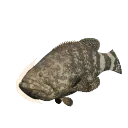
| EstuarineMangroveReef | Aquarium | Likely OK | Giant Grouper “Giant groupers are solitary fish, although they may form temporary aggregations during spawning.” |
| EstuarineReef | Aquarium | Likely OK | Golden Trevally “Golden trevally juveniles are schooling fish, and adults are known to school at times as well, and form aggregations while spawning.” |
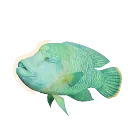
| Open SeaReef | Aquarium | Likely OK | Humphead Wrasse “Humphead wrasse are generally solitary, although may live in pairs or small groups temporarily for the purpose of breeding.” |
| EstuarineMangroveOpen SeaReef | Aquarium | Likely OK | Indo-Pacific Leopard Shark “Indo-Pacific leopard sharks are usually solitary, but may gather in large groups on occasion for reasons unknown.” |
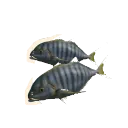
| Open SeaReef | AquariumExhibit | Likely OK | Indo-Pacific Sergeant “Indo-Pacific sergeants form small to large aggregations and live in these loose groups.” |
| EstuarineOpen SeaReef | Aquarium | Likely OK | Javanese Cownose Ray “Javanese cownose rays often swim in large groups, sometimes numbering in the hundreds, which helps them search for food and avoid predators.” |
| Reef | Aquarium | Likely OK | Longfin Batfish “Longfin batfish are social and may be found alone, in pairs, small groups or large schools.” |
| EstuarineOpen SeaReef | Aquarium | Likely OK | Ocellated Eagle Ray “Ocellated eagle rays may be solitary or loosely social. They are often seen in groups for the purposes of feeding, breeding and travelling.” |
| Reef | AquariumExhibit | Likely OK | Palette Surgeonfish “Palette surgeonfish may live solitarily, in pairs, in small groups or larger loose aggregations depending on the reef environment and food availability.” |
| Reef | Aquarium | Likely OK | Sailfin Snapper “Sailfin snappers are moderately social fish. They are often observed swimming in small groups or loose schools, especially around…” |
| Reef | Aquarium | Likely OK | Sand Tiger Shark “Sand tiger sharks are social and live in fission-fusion groups that may contain up to 200 individuals.” |
| MangroveReef | AquariumExhibit | Likely OK | Threespot Damselfish “Threespot damselfish adults live in loose aggregates or harems, and juveniles live in small shoals. In areas where there is an abu…” |
| Reef | AquariumExhibit | Likely OK | Yellow Tang “Yellow tangs form loose social feeding aggregations and may live in close quarters and form spawning groups, but they are not strongly social like schooling fish.” |
Rule: two animals can share an enclosure only when they share a biome and an enclosure type. Likely OK means Frontier's own Social & Reproduction text says both species live in groups; Unverified means the data does not say, so we do not guess. Pair-by-pair table: compatibility chart.
Same biome, but not compatible
6 of the species that accept the Reef biome cannot share an enclosure with the Schooling Bannerfish, because one side of the pair is officially solitary or explicitly not social. These are the pairings people ask about most, so they are spelled out rather than left as an unexplained gap.
| Species | Biome | Enclosure | Why not |
|---|
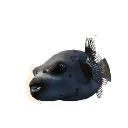
| Reef | Aquarium | Blackspotted Puffer is solitary “Blackspotted puffers are solitary and territorial, only interacting with conspecifics during the breeding season.” |
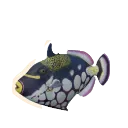
| Reef | Aquarium | Clown Triggerfish is solitary “Clown triggerfish are not social fish. They are primarily solitary and territorial, especially as adults. Individuals usually occupy and def…” |
| Open SeaReef | Aquarium | Great Hammerhead is solitary “As opposed to some other species of hammerhead, the great hammerhead shark is a solitary animal.” |
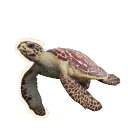
| EstuarineMangroveOpen SeaReef | Aquarium | Hawksbill Turtle is solitary “Hawksbill Turtles are solitary and only interact with other individuals to mate.” |
| EstuarineReef | Aquarium | Indian Ocean Oriental Sweetlips is solitary “The Indian Ocean oriental sweetlips lives solitarily, in pairs or in small groups and is not a particularly social species.” |
| EstuarineReef | Aquarium | Red Lionfish is solitary “Red lionfish are solitary but will gather in temporary harems during breeding events.” |
Close, but ruled out by enclosure type
Nothing: every species that shares a biome with the Schooling Bannerfish also shares its enclosure type.
What the Zoopedia says the Schooling Bannerfish can live with
The Thriving column reads “No compatible species”: nothing in the launch roster gives the Schooling Bannerfish a compatibility bonus. The Neutral column is not empty, though — 12 species are listed as safe to keep alongside it, just without a bonus.
Transcribed from the official Zoopedia Habitat tab. Thriving is the pairing the game rewards; Neutral means the pair is accepted with no bonus either way.
This answers a different question from the Likely OK table above. That one tests whether two species pass the same biome-and-enclosure check and are both described as group-living; this one is Frontier naming the pairings it actually recommends. Where the two disagree, the game's own list is the one to build on.
Behaviour, size and weight
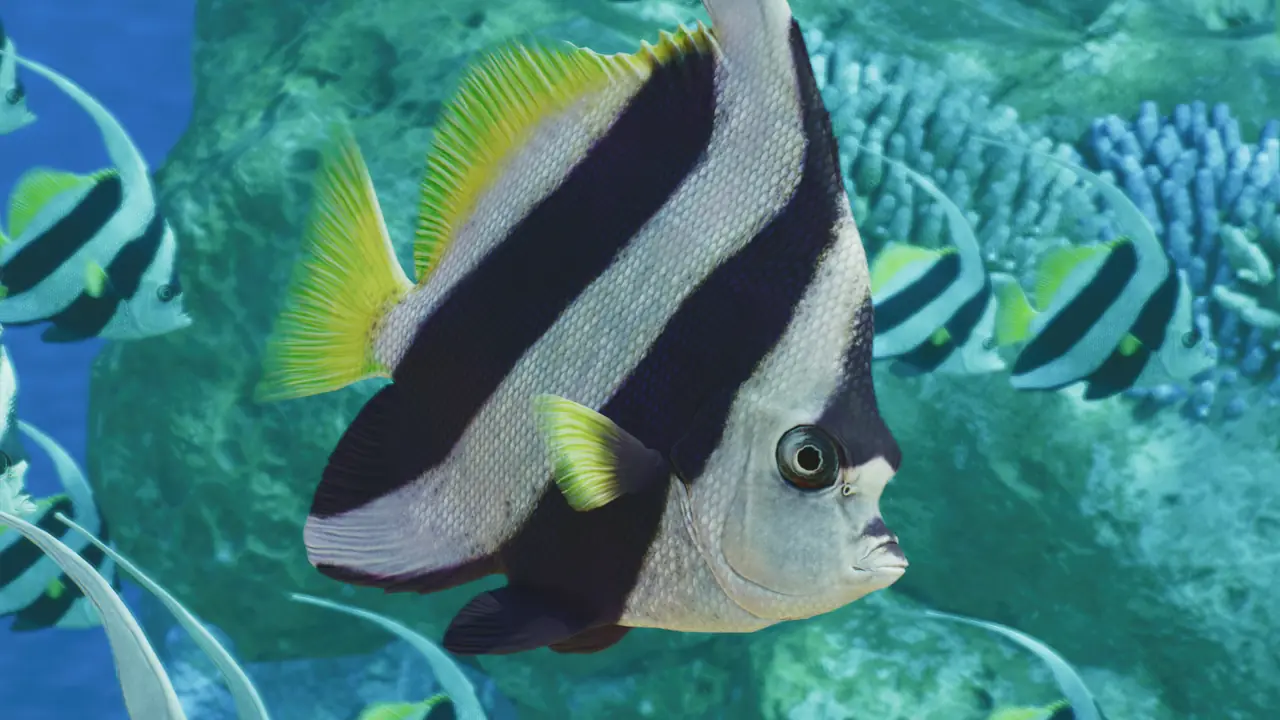
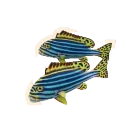
Schooling Bannerfish is classed as Social in Frontier's Social & Reproduction notes: “The schooling bannerfish is a shoaling fish and is often found in large groups up to several hundred.” On size the game lists no published size for the male. Size and weight together decide the minimum habitat footprint, so use the female figure when you are sizing a breeding pair rather than a display animal.
Building for the Schooling Bannerfish in a starter zoo
There is no barrier grade in the data, because this is not a fenced paddock animal: it is kept in an aquarium or an exhibit, where the enclosure itself is the barrier.
An aquarium is a water build rather than a paddock. The tank has to be filled and filtered, and the water type has to match the biome listed above — a tank built for a reef species will not accept a freshwater fish, even though both are aquariums.
Exhibits are the smallest build in the game. They are a glass box rather than a habitat, they carry no barrier grade, and they are the cheapest way to add a species to a zoo that has no room for another paddock. Place the box before the animal: an exhibit that is too small will not accept it.
It is classed as social, so it wants company of its own kind; a single animal alone in a habitat is the configuration that tends to go wrong.
Feeding costs and space for the Schooling Bannerfish
Food is the only recurring cost the Zoopedia prints, and for the Schooling Bannerfish it is $121 per adult per cycle. Only 7% of the 135 species that publish a figure cost less to feed, so this is one of the cheapest animals in the roster.
Scaled to the top of its population range (4 adults) that is $484 per cycle, against $121 for the minimum group of 1. The spread is the point: the same habitat costs 4 times as much to run full as it does nearly empty.
Space is the other half of the sum. The Zoopedia's minimum is 50m² of deep water area, and that minimum does not shrink for a small group — which is why the per-animal figure matters: at 4 adults it works out at 12 m² each. Budget the full 50m² even if you only start with a pair, or you will be rebuilding the fence line later.
Four more build facts come off the same page: the habitat has to hold 24°C to 28°C, the water is saltwater, guests cannot walk through it, so no walkthrough gate is needed and the game lists its temperament as Neutral.
How the Schooling Bannerfish breeds, and how long it lives
Numbers first: the Zoopedia prints no incubation period at all (0 months) and the shortest gap between litters is 11 months. That is roughly one litter a year, which is what makes this species sustainable without a second breeding pair.
The lifecycle numbers decide whether a breeding programme pays: the young are independent at 1 year, breeding never stops with age — the sterility field reads “death” and the three life stages add up to roughly 18 years.
At about 18 years per animal, one purchase of the Schooling Bannerfish is a two-decade commitment in game time. Its reproduction difficulty is rated Easy, so the limiter is patience rather than micromanagement.
Range and conservation status
Schooling Bannerfish is listed for Indian Ocean · Pacific Ocean. Its conservation status is Least Concern — not currently a species conservationists are worried about. Taxonomically the Zoopedia places it in order Acanthuriformes and the family Chaetodontidae. Conservation status is recorded for all 136 species in the official export and does not change how the animal is housed, but it is the field that tells you how rare the species is in the wild.
Which enclosure-mates to try first
If you want to try a mixed habitat, start with Indo-Pacific Leopard Shark, Blacktip Reef Shark or Giant Grouper. Each one shares both the Reef biome and the Aquarium / Exhibit enclosure type with the Schooling Bannerfish, and Frontier's own text confirms both sides live in groups — that is what the Likely OK label means on this page.
The rest of the confirmed pairings are in the table above. Anything marked Unverified is a biome-and-enclosure match where the official text does not state a social structure, so it is listed rather than recommended. The full pair-by-pair view, including every species that is ruled out, is on the compatibility chart.
FAQ
Can Schooling Bannerfish live with other animals in Planet Zoo 2?
Yes. 17 launch species share both a biome and an enclosure type with Schooling Bannerfish, and 17 of those are confirmed as group-living by Frontier's own text. Keep the Reef biome and the Aquarium / Exhibit habitat constant and mixing them is a data question, not a guess.
What biome does Schooling Bannerfish need in Planet Zoo 2?
Schooling Bannerfish accepts 1 biome: Reef. Biome is not cosmetic — a species placed outside its listed biomes will not thrive, however good the enclosure looks.
What barrier grade does Schooling Bannerfish need?
Schooling Bannerfish needs no barrier grade. With no barrier grade in the data, this species is shown behind glass in an aquarium or exhibit rather than behind a paddock fence.
Is Schooling Bannerfish in the base game or Deluxe?
Schooling Bannerfish ships with the base game in Planet Zoo 2 — no extra purchase is needed to add it to a zoo.
How big is Schooling Bannerfish in Planet Zoo 2?
Schooling Bannerfish is listed at no published size, with an adult male weight of not published. The game does not publish a body length for this species.
Is Schooling Bannerfish social or solitary?
Frontier's own Social & Reproduction text classes Schooling Bannerfish as social. “The schooling bannerfish is a shoaling fish and is often found in large groups up to several hundred.” That classification is what decides most of the compatibility verdicts on this page.
What continent is the Schooling Bannerfish from in Planet Zoo 2?
The Zoopedia lists it for Indian Ocean · Pacific Ocean. Continent is a display and scenario field rather than a housing requirement — biome and enclosure type are what decide whether a habitat is accepted — but it is the fastest way to find species that fit a themed area.
Is the Schooling Bannerfish endangered?
It is listed as Least Concern, which is not currently a species conservationists are worried about in the game's own Zoopedia export. The status carries no barrier or space penalty, so a Critically Endangered species is not harder to keep than a Least Concern one — it only changes how rare it is in the wild.
How much does it cost to feed a Schooling Bannerfish in Planet Zoo 2?
$121 per adult per cycle in the Zoopedia, so a habitat filled to the top of its 1-4 population range carries about $484 per cycle.
How often does the Schooling Bannerfish breed in Planet Zoo 2?
The interbirth period is 11 months, so that is the minimum gap between litters. Litter size is not published and young are independent at 1 year.
Related
All 136 animals · Full compatibility chart for Schooling Bannerfish · Aquarium animals · Aviary birds · Deluxe edition animals · System requirements