Planet Zoo 2 Asian Small-Clawed Otter — habitat, biome, size & which animals it can live with
Asian Small-Clawed Otter is one of the 136 Planet Zoo 2 launch species. It is kept in a Habitat, accepts the Estuarine / Lakes & Rivers / Mangrove / Rainforest / Wetlands biome, has a Grade 2 at a minimum height of 1.25 m, and is listed at 0.52 m (length). It shares a biome and an enclosure type with 27 other species, so it can be mixed into a shared enclosure — 11 of those pairings are confirmed by Frontier's own text.
Asian Small-Clawed Otter at a glance
| Field | Value |
|---|---|
| Name | Asian Small-Clawed Otter |
| Group | Otter |
| Class | Mammal |
| Biomes | Estuarine · Lakes & Rivers · Mangrove · Rainforest · Wetlands |
| Continents | Asia |
| Enclosure | Habitat |
| Barrier | Grade 2 · 1.25m |
| Size (male) | 0.52 m |
| Size (female) | 0.52 m |
| Weight (male) | 2.7–5.4 kg |
| Weight (female) | 2.7–5.4 kg |
| Conservation | Vulnerable |
| Edition | Base game |
| Revealed | 2026-10-13 |
| Care values | food cost, space, shelter, temperature |
| Enrichment | food-based & habitat items |
Source: official Planet Zoo 2 Zoopedia export (136 species). Also on the searchable animal list.
Enclosure and barrier requirements
Asian Small-Clawed Otter is kept in a Habitat and accepts the Estuarine / Lakes & Rivers / Mangrove / Rainforest / Wetlands biomes. The barrier requirement is Grade 2 · 1.25m, and that is the number to check before building: a Grade 4 animal behind a Grade 1 wall is the most common way a first zoo stalls.
Which animals can live with the Asian Small-Clawed Otter?
12 launch species share both a biome and an enclosure type with the Asian Small-Clawed Otter, so they are the only candidates for a mixed habitat. Of those, 11 are confirmed group-living by Frontier's own text and 1 are unverified — both are listed rather than presented as equally safe.
| Species | Biome | Enclosure | Verdict | Evidence |
|---|---|---|---|---|
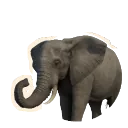
| DesertSavannahWetlands | Habitat | Likely OK | African Savannah Elephant “Elephants are social animals, the exception being mature males who usually live alone. Females live in closely bonded family herds…” | |
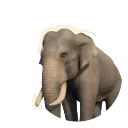
| RainforestSavannahWetlands | Habitat | Likely OK | Asian Elephant “Elephants are mostly social animals, with females living, travelling and foraging in tight-knit herds with their calves. They will…” | |
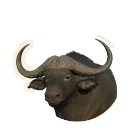
| SavannahWetlands | Habitat | Likely OK | Cape Buffalo “Cape buffalo live in herds made up of related female groups, with bachelor groups and solitary dominant males on the periphery of the female group.” | |
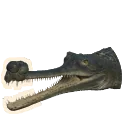
| Lakes & RiversRainforestWetlands | Habitat | Likely OK | Gharial “While gharials may live in close contact with each other – as well as compete for sandy riverbanks to use as basking sites – they are not social animals.” | |
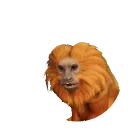
| Rainforest | Habitat | Likely OK | Golden Lion Tamarin “Golden lion tamarins are highly social primates. They live in family groups of 2 to 8 individuals, usually consisting of a breedin…” | |
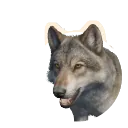
| DesertRainforestSavannahTaigaTemperateTundra | Habitat | Likely OK | Grey Wolf “Wolves are very social animals that live in family packs. An average pack contains one alpha male, one alpha female, their young a…” | |
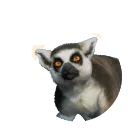
| Rainforest | Habitat | Likely OK | Ring-Tailed Lemur “Ring-tailed lemurs live in family groups of up to 30 individuals called 'troops' that will travel and forage together. The females…” | |
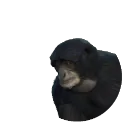
| Rainforest | Habitat | Likely OK | Siamang “Siamangs live in family groups made up of a monogamous breeding pair with their immature offspring, usually 2 to 3 juveniles. They…” | |
| Rainforest | Habitat | Likely OK | Sumatran Orangutan “Occasionally, a male and female may travel together for a time, but orangutans generally live alone, except for a mother and her young.” | |
| Rainforest | Habitat | Likely OK | Western Chimpanzee “Chimpanzees are very social animals, living in large groups in the wild. Males are dominant in chimpanzee society, with their age…” | |
| RainforestWetlands | Habitat | Likely OK | Western Lowland Gorilla “Gorillas are social animals, living in small groups with an approximately even split of male and females. There will usually be on…” | |
| Lakes & RiversTaigaTemperate | Habitat | Unverified | Frontier has not stated a social structure for this species. |
Rule: two animals can share an enclosure only when they share a biome and an enclosure type. Likely OK means Frontier's own Social & Reproduction text says both species live in groups; Unverified means the data does not say, so we do not guess. Pair-by-pair table: compatibility chart.
Same biome, but not compatible
15 of the species that accept the Estuarine / Lakes & Rivers / Mangrove / Rainforest / Wetlands biome cannot share an enclosure with the Asian Small-Clawed Otter, because one side of the pair is officially solitary. These are the pairings people ask about most, so they are spelled out rather than left as an unexplained gap.
| Species | Biome | Enclosure | Why not |
|---|---|---|---|
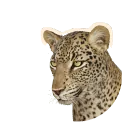
| RainforestSavannah | Habitat | African Leopard is solitary “African leopards are solitary except for a mother raising her cubs.” | |
| Rainforest | Habitat | Binturong is solitary “The binturong is a solitary animal but is not territorial and individuals will tolerate each other in the same space. If two binturongs meet…” | |
| Lakes & RiversSavannahWetlands | Habitat | Common Hippopotamus is solitary “Hippos interact with each other, but do not form close groups or bonds. Mature males are semi-solitary and territorial, presiding over a str…” | |
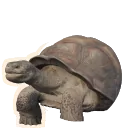
| Rainforest | Habitat | Galápagos Giant Tortoise is solitary “Giant Galápagos tortoises are solitary but do tolerate each other. Saddleback males are particularly aggressive towards each other during the mating season.” | |
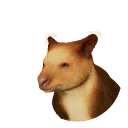
| Rainforest | Habitat | Goodfellow's Tree-Kangaroo is solitary “Goodfellow’s tree-kangaroos are largely solitary, except for a mother and her joey, and when brief pair bonds form between males and females during breeding.” | |
| TaigaTemperateTundraWetlands | Habitat | Grizzly Bear is solitary “Grizzly bears are solitary, the only exception being a mother with her cubs. They only interact with each other to mate or fight over mates.” | |
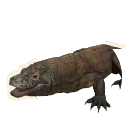
| MangroveRainforestWetlands | Habitat | Komodo Dragon is solitary “Komodo dragons are solitary creatures, but they will group together to feed and mate. When in groups, the largest male is dominant; he will…” | |
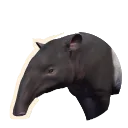
| RainforestWetlands | Habitat | Malayan Tapir is solitary “Malayan tapirs are often solitary but may also be found in monogamous pairs with their young offspring or in temporary feeding groups. They are tolerant of other individuals.” | |
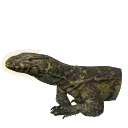
| SavannahWetlands | Habitat | Nile Monitor is solitary “Nile monitors are solitary animals and prefer to be alone.” | |
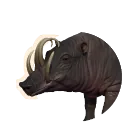
| Rainforest | Habitat | North Sulawesi Babirusa is solitary “Babirusa females tend to live in small groups made up of sisters and their offspring under two years old. Mature males live alone but will c…” | |
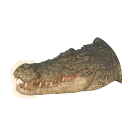
| EstuarineMangroveRainforest | Habitat | Saltwater Crocodile is solitary “Saltwater crocodiles are solitary, territorial and extremely aggressive. Males will tolerate females living on their territory, and females…” | |
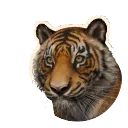
| RainforestWetlands | Habitat | Sumatran Tiger is solitary “Sumatran tigers are solitary animals. They only interact with each other to mate, with the exception of a mother with her cubs.” | |
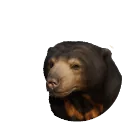
| RainforestWetlands | Habitat | Sun Bear is solitary “Sun bears are solitary, with the exception of a mother with her cubs. They only interact to mate.” | |
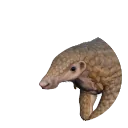
| Rainforest | Habitat | Sunda Pangolin is solitary “Pangolins are solitary animals and spend their time alone, except during the mating season and when a mother is with her infant.” | |
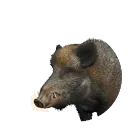
| RainforestSavannahTemperateWetlands | Habitat | Wild Boar is solitary “Female wild boars live in sounders led by an old matriarch, consisting of non-breeding females and mothers with their offspring. Adult males…” |


Close, but ruled out by enclosure type
50 species share at least one biome with the Asian Small-Clawed Otter but use a different enclosure type — a land habitat against an aquarium or a flying aviary — so they cannot be mixed however well the biomes line up.
African Tigerfish, Amazonian Giant Centipede, American Bullfrog, Axolotl, Blacktip Reef Shark, Blunthead Cichlid, Boa Constrictor, Boeseman's Rainbowfish, Brown Trout, Clown Loach, Common Bluetongue, Common Rudd, Danube Crested Newt, Diamondback Terrapin, Eurasian Bittern, Fire Salamander, Giant Forest Scorpion, Giant Gourami, Giant Grouper, Giant Malaysian Leaf Insect, Giant Slippery Frog, Giant Tiger Land Snail, Golden Poison Frog, Golden Trevally, Goliath Beetle, Great Hornbill, Greater Flamingo, Hawksbill Turtle, Indian Ocean Oriental Sweetlips, Indo-Pacific Leopard Shark, Javan Green Magpie, Javanese Cownose Ray, Koi, Lehmann's Poison Frog, Long-Eared Owl, Long-Tailed Parakeet, Menelaus Blue Morpho, Mexican Redknee, Monarch, Moon Jelly
Behaviour, size and weight
Asian Small-Clawed Otter is classed as Social in Frontier's Social & Reproduction notes: “Asian small-clawed otters are very social and intelligent animals, living in family groups of around 15 members. These groups are led by a dominant mated pair and their offspring across various litters.” On size the game lists 0.52 m (length) for the male and 0.52 m for the female. Size and weight together decide the minimum habitat footprint, so use the female figure when you are sizing a breeding pair rather than a display animal.
Building for the Asian Small-Clawed Otter in a starter zoo
The barrier is the first thing to plan: Grade 2 at a minimum height of 1.25 m. That is a cheap early-game wall, and it is part of what makes this species easy to house in a new zoo. Build the fence line before you place the animal, because a habitat that fails the barrier check will not accept it at all.
For the outdoor build, terrain and planting matter as much as the fence. Paint the habitat to its listed biome and use that biome's plant set: a species kept outside its biome loses welfare even when every other number on this page is satisfied.
It is classed as social, so it wants company of its own kind; a single animal alone in a habitat is the configuration that tends to go wrong.
It also accepts 5 biomes (Estuarine / Lakes & Rivers / Mangrove / Rainforest / Wetlands), so the same species can be rehoused in a second habitat without changing animal.
Range and conservation status
Asian Small-Clawed Otter is listed for Asia. Its conservation status is Vulnerable — one step away from Endangered. Taxonomically the Zoopedia places it in order Carnivora and the family Mustelidae. Conservation status is recorded for all 136 species in the official export and does not change how the animal is housed, but it is the field that tells you how rare the species is in the wild.
Which enclosure-mates to try first
If you want to try a mixed habitat, start with Grey Wolf, African Savannah Elephant or Asian Elephant. Each one shares both the Estuarine / Lakes & Rivers / Mangrove / Rainforest / Wetlands biome and the Habitat enclosure type with the Asian Small-Clawed Otter, and Frontier's own text confirms both sides live in groups — that is what the Likely OK label means on this page.
The rest of the confirmed pairings are in the table above. Anything marked Unverified is a biome-and-enclosure match where the official text does not state a social structure, so it is listed rather than recommended. The full pair-by-pair view, including every species that is ruled out, is on the compatibility chart.
FAQ
Can Asian Small-Clawed Otter live with other animals in Planet Zoo 2?
What biome does Asian Small-Clawed Otter need in Planet Zoo 2?
What barrier grade does Asian Small-Clawed Otter need?
Is Asian Small-Clawed Otter in the base game or Deluxe?
How big is Asian Small-Clawed Otter in Planet Zoo 2?
Is Asian Small-Clawed Otter social or solitary?
What continent is the Asian Small-Clawed Otter from in Planet Zoo 2?
Is the Asian Small-Clawed Otter endangered?
Related
All 136 animals · Full compatibility chart for Asian Small-Clawed Otter · Aquarium animals · Aviary birds · Deluxe edition animals · System requirements