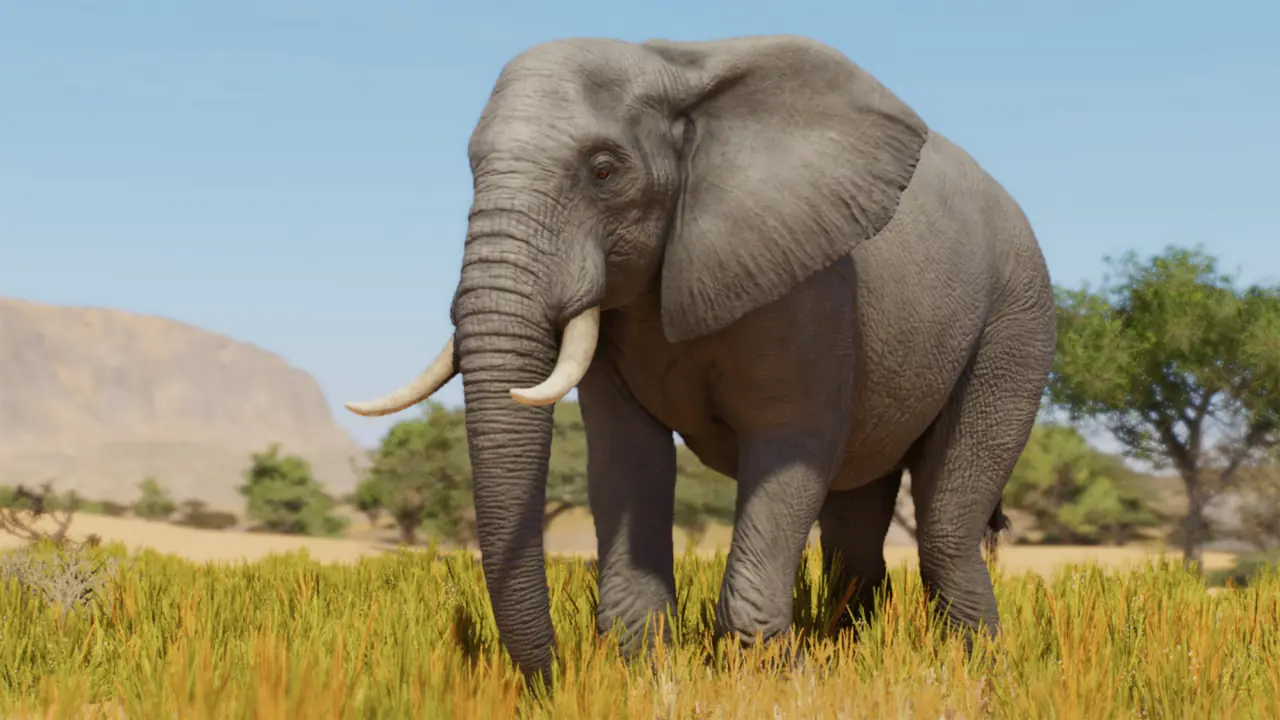
Planet Zoo 2 African Savannah Elephant — habitat, biome, size & which animals it can live with
African Savannah Elephant is one of the 130 Planet Zoo 2 launch species. It is housed in a Habitat habitat, accepts the Desert / Savannah / Wetlands biome, carries a Grade 4 · 3m barrier requirement and is listed at 3.20 m (shoulder). It shares a biome and an enclosure type with 34 other species, so it can be mixed into a shared enclosure — 22 of those pairings are confirmed by Frontier's own text.
Every figure on this page comes from the official Planet Zoo 2 Zoopedia export rather than trailer footage: biome, enclosure type, barrier grade, size and the compatibility verdicts are all taken from the game's own data.
Size (M)3.20 m
Weight (M)5200–6900 kg
BarrierGrade 4
EnclosureHabitat
BiomesDesert / Savannah / Wetlands
StatusEndangered
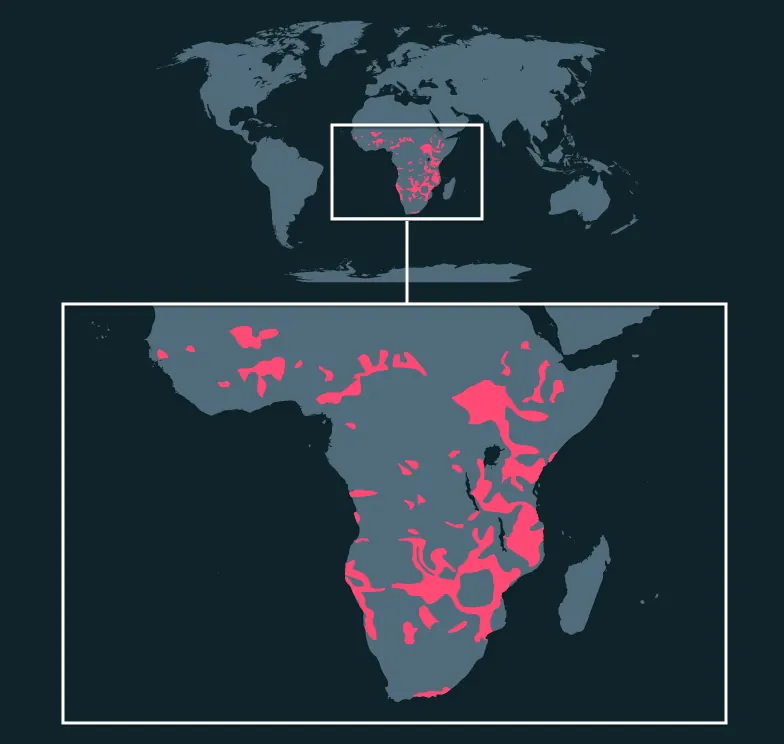
Where it lives in the wild
Africa
22verified enclosure-mates
23same biome + habitat
3.20 msize (male)
Grade 4barrier grade
African Savannah Elephant at a glance
| Field | Value |
|---|
| Name | African Savannah Elephant |
| Group | Elephant |
| Class | Mammal |
| Biomes | Desert / Savannah / Wetlands |
| Continents | Africa |
| Enclosure | Habitat |
| Barrier | Grade 4 · 3m |
| Size (male) | 3.20 m |
| Size (female) | 2.60 m |
| Weight (male) | 5200–6900 kg |
| Weight (female) | 2600–3500 kg |
| Conservation | Endangered |
| Edition | Base game |
| Revealed | 2026-06-23 |
Source: official Planet Zoo 2 Zoopedia export (130 species). Also on the searchable animal list.
Enclosure and barrier requirements
African Savannah Elephant needs a Habitat enclosure and accepts the Desert / Savannah / Wetlands biomes. The barrier requirement is Grade 4 · 3m, and that is the number to check before building: a Grade 4 animal behind a Grade 1 wall is the most common way a first zoo stalls.
Which animals can live with the African Savannah Elephant?
23 launch species share both a biome and an enclosure type with the African Savannah Elephant, so they are the only candidates for a mixed habitat. Of those, 22 are confirmed group-living by Frontier's own text and 1 are unverified — both are listed rather than presented as equally safe.
| Species | Biome | Enclosure | Verdict | Evidence |
|---|
| Open SeaSavannah | Habitat | Likely OK | African Penguin “African penguins are social animals and when not foraging at sea, they live in extremely large colonies of many thousands of mated pairs.” |
| Savannah | Habitat | Likely OK | African Wild Dog “African wild dogs are extremely social animals. They live in packs with an alpha male and female, who both lead the group on hunts and act as the main decision makers.” |
| RainforestSavannahWetlands | Habitat | Likely OK | Asian Elephant “Elephants are mostly social animals, with females living, travelling and foraging in tight-knit herds with their calves. They will…” |
| DesertSavannahTemperate | Habitat | Likely OK | Bactrian Camel “Camels are social animals, living in harem groups in the wild comprised of a dominant male, several female mates and their offspring.” |
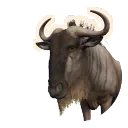
| Savannah | Habitat | Likely OK | Black Wildebeest “Black wildebeest live in large herds comprised of groups of related females and their young offspring; bachelor herds of young mal…” |
| Savannah | Habitat | Likely OK | Blue Wildebeest “In the wild, blue wildebeest congregate in large herds comprised of several subgroups of related females and their offspring, bach…” |
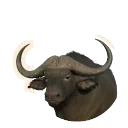
| SavannahWetlands | Habitat | Likely OK | Cape Buffalo “Cape buffalo live in herds made up of related female groups, with bachelor groups and solitary dominant males on the periphery of the female group.” |
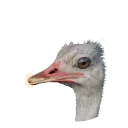
| Savannah | Habitat | Likely OK | Common Ostrich “In the wild, ostriches are primarily social animals. During the breeding season, a small group of females will inhabit the territo…” |
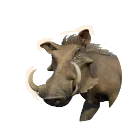
| Savannah | Habitat | Likely OK | Common Warthog “Warthogs have a complex social structure. Mature females tend to live in interrelated groups with their offspring. However, year-o…” |
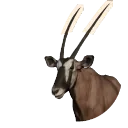
| DesertSavannah | Habitat | Likely OK | Gemsbok “A herd of Gemsbok numbers between 10 and 30. The females group together in interrelated herds with their young offspring, usually…” |
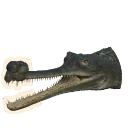
| Lakes & RiversRainforestWetlands | Habitat | Likely OK | Gharial “While gharials may live in close contact with each other – as well as compete for sandy riverbanks to use as basking sites – they are not social animals.” |
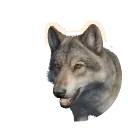
| DesertRainforestSavannahTaigaTemperateTundra | Habitat | Likely OK | Grey Wolf “Wolves are very social animals that live in family packs. An average pack contains one alpha male, one alpha female, their young a…” |
| Savannah | Habitat | Likely OK | Lion “Lions are social animals. In the wild, a pride usually consists of several related females and their young, a dominant male and one or two subordinate males.” |
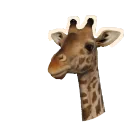
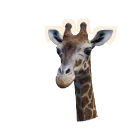
| Savannah | Habitat | Likely OK | Masai Giraffe “Masai giraffes live in fluid, fission-fusion social groups, meaning individuals frequently join or leave groups without developing…” |
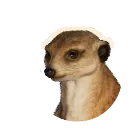
| DesertSavannah | Habitat | Likely OK | Meerkat “Meerkats live in family packs and are considered to be ‘eusocial’, meaning highly socially organised and pack members have strongly defined roles within their group.” |
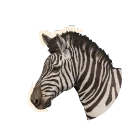
| Savannah | Habitat | Likely OK | Plains Zebra “Plains zebra live in cohesive herds in the wild, which can be composed of several harems that consist of one stallion, several females and their young offspring.” |
| Savannah | Habitat | Likely OK | Reticulated Giraffe “Reticulated giraffes live in loosely-bonded groups. Females live in herds that forage and travel together, but may leave and join several groups in their lifetime.” |
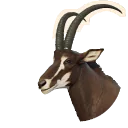
| Savannah | Habitat | Likely OK | Sable Antelope “The sable antelope is a social herd species and in the wild live in two two types of groups: in breeding groups of related females…” |
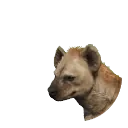
| DesertSavannah | Habitat | Likely OK | Spotted Hyena “Hyenas are social animals that live in 'clans' of related females, immigrant males and their cubs. They have a communal den which…” |
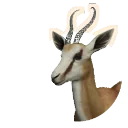
| DesertSavannah | Habitat | Likely OK | Springbok “Springboks have a complex and changeable social structure. Like most ungulates, they live in herds that can be composed of multiple group types.” |
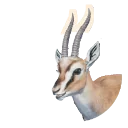
| Savannah | Habitat | Likely OK | Thomson's Gazelle “Thomson's gazelle have a complex and changeable social structure. Like most ungulates, they live in herds composed of multiple gro…” |
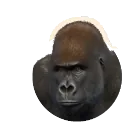
| RainforestWetlands | Habitat | Likely OK | Western Lowland Gorilla “Gorillas are social animals, living in small groups with an approximately even split of male and females. There will usually be on…” |
| DesertSavannah | Habitat | Unverified | Frontier has not stated a social structure for this species. |
Rule: two animals can share an enclosure only when they share a biome and an enclosure type. Likely OK means Frontier's own Social & Reproduction text says both species live in groups; Unverified means the data does not say, so we do not guess. Pair-by-pair table: compatibility chart.
Same biome, but not compatible
11 of the species that accept the Desert / Savannah / Wetlands biome cannot share an enclosure with the African Savannah Elephant, because one side of the pair is officially solitary. These are the pairings people ask about most, so they are spelled out rather than left as an unexplained gap.
| Species | Biome | Enclosure | Why not |
|---|
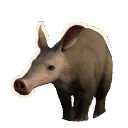
| Savannah | Habitat | Aardvark is solitary “With the exception of a mother and her cub, aardvarks are solitary in nature. They only interact when mating or competing over mates.” |
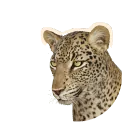
| RainforestSavannah | Habitat | African Leopard is solitary “African leopards are solitary except for a mother raising her cubs.” |
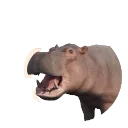
| Lakes & RiversSavannahWetlands | Habitat | Common Hippopotamus is solitary “Hippos interact with each other, but do not form close groups or bonds. Mature males are semi-solitary and territorial, presiding over a str…” |
| TaigaTemperateTundraWetlands | Habitat | Grizzly Bear is solitary “Grizzly bears are solitary, the only exception being a mother with her cubs. They only interact with each other to mate or fight over mates.” |
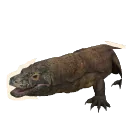
| MangroveRainforestWetlands | Habitat | Komodo Dragon is solitary “Komodo dragons are solitary creatures, but they will group together to feed and mate. When in groups, the largest male is dominant; he will…” |
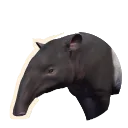
| RainforestWetlands | Habitat | Malayan Tapir is solitary “Malayan tapirs are often solitary but may also be found in monogamous pairs with their young offspring or in temporary feeding groups. They are tolerant of other individuals.” |
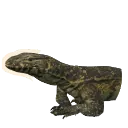
| SavannahWetlands | Habitat | Nile Monitor is solitary “Nile monitors are solitary animals and prefer to be alone.” |
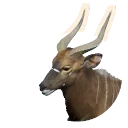
| Savannah | Habitat | Nyala is solitary “Female nyala live in small groups with their offspring and forage through the undergrowth together. Adult males are solitary, living alone e…” |
| RainforestWetlands | Habitat | Sumatran Tiger is solitary “Sumatran tigers are solitary animals. They only interact with each other to mate, with the exception of a mother with her cubs.” |
| RainforestWetlands | Habitat | Sun Bear is solitary “Sun bears are solitary, with the exception of a mother with her cubs. They only interact to mate.” |
| RainforestSavannahTemperateWetlands | Habitat | Wild Boar is solitary “Female wild boars live in sounders led by an old matriarch, consisting of non-breeding females and mothers with their offspring. Adult males…” |
Close, but ruled out by enclosure type
30 species share at least one biome with the African Savannah Elephant but use a different enclosure type — a land habitat against an aquarium or a flying aviary — so they cannot be mixed however well the biomes line up.
American Bullfrog, Boa Constrictor, Cloudless Sulphur, Common Bluetongue, Danube Crested Newt, Desert Horned Viper, Diamondback Terrapin, Eastern Brown Snake, Eurasian Bittern, European Peacock, Fire Salamander, Giant Tiger Land Snail, Gila Monster, Golden Eagle, Goliath Beetle, Greater Flamingo, Long-Eared Owl, Menelaus Blue Morpho, Mexican Redknee, Monarch, Old World Swallowtail, Sacred Scarab Beetle, Secretarybird, Shoebill, Toco Toucan, West Indian Manatee, Western Diamondback Rattlesnake, White-Backed Vulture, White-Tailed Sea-Eagle, Yellow Anaconda
Behaviour, size and weight
African Savannah Elephant is classed as Mixed group in Frontier's Social & Reproduction notes: “Elephants are social animals, the exception being mature males who usually live alone. Females live in closely bonded family herds – including their young – and will travel and forage together.” On size the game lists 3.20 m (shoulder) for the male and 2.60 m for the female. Size and weight together decide the minimum habitat footprint, so use the female figure when you are sizing a breeding pair rather than a display animal.
FAQ
Can African Savannah Elephant live with other animals in Planet Zoo 2?
Yes. 23 launch species share both a biome and an enclosure type with African Savannah Elephant, and 22 of those are confirmed as group-living by Frontier's own text. Keep the Desert / Savannah / Wetlands biome and the Habitat habitat constant and mixing them is a data question, not a guess.
What biome does African Savannah Elephant need in Planet Zoo 2?
African Savannah Elephant accepts 3 biomes: Desert / Savannah / Wetlands. Biome is not cosmetic — a species placed outside its listed biomes will not thrive, however good the enclosure looks.
What barrier grade does African Savannah Elephant need?
African Savannah Elephant needs Grade 4 · 3m. That is one of the stricter requirements in the launch roster, so budget the wall before the animal and remember that a Grade 4 fence is also the tallest build you will place.
Is African Savannah Elephant in the base game or Deluxe?
African Savannah Elephant ships with the base game in Planet Zoo 2 — no extra purchase is needed to add it to a zoo.
How big is African Savannah Elephant in Planet Zoo 2?
African Savannah Elephant is listed at 3.20 m (shoulder), with an adult male weight of 5200–6900 kg. That body length, not the barrier height, is what sets the minimum enclosure footprint, so plan the habitat around the animal's size before you pick the plot.
Is African Savannah Elephant social or solitary?
Frontier's own Social & Reproduction text classes African Savannah Elephant as mixed group. “Elephants are social animals, the exception being mature males who usually live alone. Females live in closely bonded family herds – including their y…” That classification is what decides most of the compatibility verdicts on this page.
Related
All 130 animals · Full compatibility chart for African Savannah Elephant · Aquarium animals · Aviary birds · Deluxe edition animals · System requirements