Planet Zoo 2 Koi — habitat, biome, size & which animals it can live with
Koi is one of the 136 Planet Zoo 2 launch species. It is kept in an Aquarium or an Exhibit, accepts the Lakes & Rivers biome, has no barrier requirement, and is listed at no published size. It shares a biome and an enclosure type with 12 other species, so it can be mixed into a shared enclosure — 7 of those pairings are confirmed by Frontier's own text.
Koi at a glance
| Field | Value |
|---|---|
| Name | Koi |
| Group | Carp |
| Class | Fish |
| Biomes | Lakes & Rivers |
| Continents | Asia · Europe |
| Enclosure | Aquarium / Exhibit |
| Barrier | — |
| Size (male) | no published size |
| Size (female) | — |
| Weight (male) | 6–15 kg |
| Weight (female) | 6–15 kg |
| Conservation | Domesticated |
| Edition | Base game |
| Revealed | 2026-10-13 |
| Care values | food cost, space, shelter, temperature |
| Enrichment | food-based & habitat items |
Source: official Planet Zoo 2 Zoopedia export (136 species). Also on the searchable animal list.
Enclosure and barrier requirements
Koi is kept in an Aquarium or an Exhibit and accepts the Lakes & Rivers biome. The barrier requirement is none at all, and that is the number to check before building: a Grade 4 animal behind a Grade 1 wall is the most common way a first zoo stalls.
Which animals can live with the Koi?
9 launch species share both a biome and an enclosure type with the Koi, so they are the only candidates for a mixed habitat. Of those, 7 are confirmed group-living by Frontier's own text and 2 are unverified — both are listed rather than presented as equally safe.
| Species | Biome | Enclosure | Verdict | Evidence |
|---|---|---|---|---|
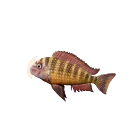
| Lakes & Rivers | AquariumExhibit | Likely OK | Blunthead Cichlid “Blunthead cichlids live in large social groups along rocky shorelines, where individuals maintain small feeding territories while…” | |
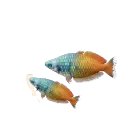
| Lakes & Rivers | AquariumExhibit | Likely OK | Boeseman's Rainbowfish “Boeseman’s rainbowfish is a highly social schooling species that naturally lives in loose but cohesive groups. Social interaction…” | |
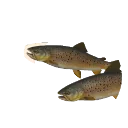
| Lakes & Rivers | AquariumExhibit | Likely OK | Brown Trout “Brown trout are solitary and territorial fish, but they become more social during spawning events.” | |
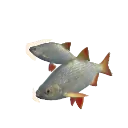
| Lakes & Rivers | AquariumExhibit | Likely OK | Common Rudd “Rudd typically live in shoals (groups), especially when young, which provides protection from predators and improves foraging efficiency.” | |
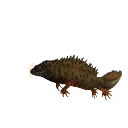
| Lakes & RiversWetlands | Exhibit | Likely OK | Danube Crested Newt “Danube crested newts do not have specific social requirements and mainly live solitarily. Provided there is enough space and food, they tolerate other individuals nearby.” | |
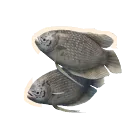
| Lakes & Rivers | AquariumExhibit | Likely OK | Giant Gourami “Giant gouramis are moderately social: juveniles often shoal together, but adults become more territorial and may not live in close proximity to others.” | |
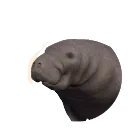
| EstuarineLakes & RiversMangroveOpen SeaWetlands | Aquarium | Likely OK | West Indian Manatee “Manatees are semi-social. They are likely to gather in groups for feeding and mating, and will interact with others when they meet…” | |
| Lakes & RiversWetlands | Exhibit | Unverified | Frontier has not stated a social structure for this species. | |
| Lakes & Rivers | AquariumExhibit | Unverified | Frontier has not stated a social structure for this species. |
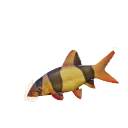
Rule: two animals can share an enclosure only when they share a biome and an enclosure type. Likely OK means Frontier's own Social & Reproduction text says both species live in groups; Unverified means the data does not say, so we do not guess. Pair-by-pair table: compatibility chart.
Same biome, but not compatible
3 of the species that accept the Lakes & Rivers biome cannot share an enclosure with the Koi, because one side of the pair is officially solitary. These are the pairings people ask about most, so they are spelled out rather than left as an unexplained gap.
| Species | Biome | Enclosure | Why not |
|---|---|---|---|
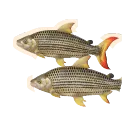
| Lakes & Rivers | AquariumExhibit | African Tigerfish is solitary “African tigerfish are best described as asocial to loosely aggregative predators: juveniles show schooling behaviour, while adults are large…” | |
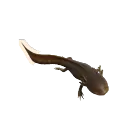
| Lakes & Rivers | Exhibit | Axolotl is solitary “Axolotls are solitary in the wild and are happy living alone in captivity. However, unless different in size, they are content with other ax…” | |
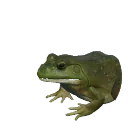
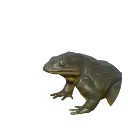
| Lakes & Rivers | Exhibit | Giant Slippery Frog is solitary “Giant slippery frogs are solitary and do not interact except to mate or compete over mates.” |
Close, but ruled out by enclosure type
4 species share at least one biome with the Koi but use a different enclosure type — a land habitat against an aquarium or a flying aviary — so they cannot be mixed however well the biomes line up.
Asian Small-Clawed Otter, Common Hippopotamus, Eurasian Beaver, Gharial
Behaviour, size and weight
Koi is classed as Social in Frontier's Social & Reproduction notes: “Koi are social fish that thrive in groups and should not be kept alone.” On size the game lists no published size for the male. Size and weight together decide the minimum habitat footprint, so use the female figure when you are sizing a breeding pair rather than a display animal.
Building for the Koi in a starter zoo
There is no barrier grade in the data, because this is not a fenced paddock animal: it is kept in an aquarium or an exhibit, where the enclosure itself is the barrier.
An aquarium is a water build rather than a paddock. The tank has to be filled and filtered, and the water type has to match the biome listed above — a tank built for a reef species will not accept a freshwater fish, even though both are aquariums.
Exhibits are the smallest build in the game. They are a glass box rather than a habitat, they carry no barrier grade, and they are the cheapest way to add a species to a zoo that has no room for another paddock. Place the box before the animal: an exhibit that is too small will not accept it.
It is classed as social, so it wants company of its own kind; a single animal alone in a habitat is the configuration that tends to go wrong.
Range and conservation status
Koi is listed for Asia · Europe. Its conservation status is Domesticated — Domesticated. Taxonomically the Zoopedia places it in order Cypriniformes and the family Cyprinidae. Conservation status is recorded for all 136 species in the official export and does not change how the animal is housed, but it is the field that tells you how rare the species is in the wild.
Which enclosure-mates to try first
If you want to try a mixed habitat, start with West Indian Manatee, Danube Crested Newt or Blunthead Cichlid. Each one shares both the Lakes & Rivers biome and the Aquarium / Exhibit enclosure type with the Koi, and Frontier's own text confirms both sides live in groups — that is what the Likely OK label means on this page.
The rest of the confirmed pairings are in the table above. Anything marked Unverified is a biome-and-enclosure match where the official text does not state a social structure, so it is listed rather than recommended. The full pair-by-pair view, including every species that is ruled out, is on the compatibility chart.
FAQ
Can Koi live with other animals in Planet Zoo 2?
What biome does Koi need in Planet Zoo 2?
What barrier grade does Koi need?
Is Koi in the base game or Deluxe?
How big is Koi in Planet Zoo 2?
Is Koi social or solitary?
What continent is the Koi from in Planet Zoo 2?
Is the Koi endangered?
Related
All 136 animals · Full compatibility chart for Koi · Aquarium animals · Aviary birds · Deluxe edition animals · System requirements